
Are Hypoallergenic Cats Real? What Science Says About Fel d 1
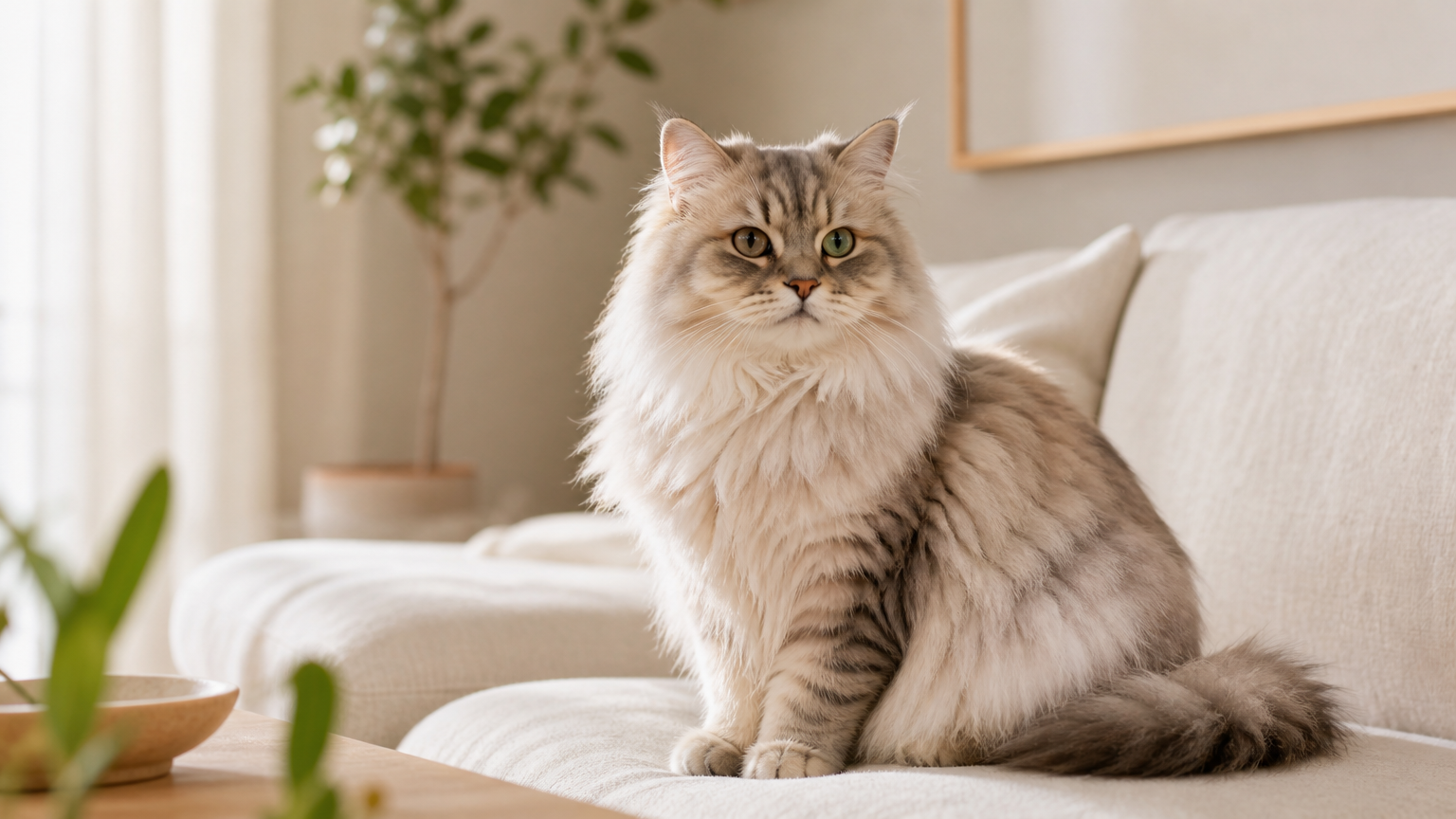
No truly hypoallergenic cat exists. Every cat produces the protein that causes cat allergies, so "hypoallergenic" describes a spectrum of lower output, never an absence of reaction.
Understanding why makes the decision easier, and it points at something better than avoiding cats for life.
What Fel d 1 is
People who react to cats are almost always reacting to a protein called Fel d 1.
It isn't in the fur. It's produced in saliva, skin and urine. Cats groom constantly, spreading saliva across the coat, where it dries and hitches a ride on flakes of skin that float into the air and settle on every surface.
The fur is the delivery truck, not the cargo. And every cat produces Fel d 1: long-haired, short-haired, hairless. A hairless cat still makes it in skin and saliva. That's why an allergen-free cat doesn't exist.
A spectrum, not a promise
Hypoallergenic means "below normal" allergenic, not "non-allergenic." That prefix does a lot of quiet work that marketing glosses over.
It's a dial, not a switch. Some cats put less Fel d 1 into the air. None are at zero. Read a breed advertised as hypoallergenic as may produce less, never safe for allergy sufferers.
Two things set where a cat lands: the breed's average tendency, and the individual animal. The second is the one people underestimate.
The breeds, and the caveat
The Siberian and Balinese are commonly cited as lower-allergen options, and some individual cats genuinely spread less than others.
But two cats of the same breed can produce dramatically different amounts of Fel d 1. Breed tells you the average and very little about the specific animal you're about to bring home.
It plays out both ways. One person adopts a Siberian and does fine; their friend adopts one from similar stock and sneezes through the first week. Same breed, different cats.
Choosing a breed is choosing better odds, not a solution. A breeder promising a cat that "won't cause allergies" is a red flag, not a reassurance.
If you're choosing a cat anyway
Spend real time with the specific animal. Not the breed, not a photo. Sit with that cat for an hour or more, ideally more than once, and notice how you respond over time rather than over thirty seconds. This tells you more than any breed label.
Know your own sensitivities. Some people react hard to Fel d 1; others are mildly bothered and live comfortably with a lower-allergen cat and good habits. Worth confirming what you react to, and how strongly, before a decade-long commitment.
Set the home up to lower exposure. Cat out of the bedroom, a good air filter, hand-washing after handling, regular cleaning. None of it removes the protein; all of it lowers the daily dose.
If anyone in your home has ever had a severe or anaphylactic reaction (trouble breathing, throat tightness, swelling), that is not a spend-time-with-the-cat situation. Talk to a clinician, and treat any recurrence as an emergency.
The option most cat lovers don't know about
Antihistamines mask symptoms. They quiet things for a few hours, then the immune system goes back to overreacting.
Immunotherapy retrains it. Exposing the body to tiny, controlled, gradually increasing amounts of the allergen teaches the immune system to stop treating Fel d 1 as a threat, building tolerance rather than masking the reaction.
That's the difference between managing an allergy indefinitely and turning it down.
This article is for general information and isn't medical advice.