
Finger Prick, Lab Draw, or At-Home Device: How Allergy Blood Tests Compare
Every allergy blood test measures the same thing: specific IgE, the antibody your immune system produces against things it has decided to react to. What differs between providers is how the blood gets out of you and into the lab.
That sounds like a logistics detail. It isn't. The collection method quietly determines how many allergens you can be screened for, how likely your sample is to be rejected, and whether you need to take time off work.
Here are the three approaches, what each is genuinely good at, and the trade-offs nobody puts on a pricing page.
1. A lab draw
This is the one you already know. You make an appointment, go to a draw site or have a mobile phlebotomist come to you, and a trained person puts a needle in a vein in your arm and fills one or more tubes.
What it's good at: everything, technically. Venipuncture is the reference standard. You get a large volume of high-quality blood in a controlled setting, drawn by someone who does it all day. If a panel is enormous, or a result is borderline and needs repeating, this is the method with the most margin.
The trade-offs: it's an appointment. You travel to it, or you coordinate a window at home for a phlebotomist and sometimes pay a convenience fee for the privilege. There is a needle in your vein. And the scheduling friction is real enough that a meaningful number of people who order a test never actually complete this step.
Being the best sample doesn't help if the sample never gets taken.
2. A finger prick
A lancet pricks your fingertip, and you squeeze drops of blood onto a card or into a small tube.
What it's good at: it's cheap, it's familiar, it ships in a flat envelope, and it has decades of use behind it in glucose monitoring and newborn screening. For tests that need a tiny amount of blood, it's perfectly adequate.
The trade-offs: two, and they're linked.
The first is volume. Each allergen on a panel consumes sample. A fingertip produces blood slowly and in small amounts, so finger-prick collection puts a practical ceiling on how many allergens one test can cover. This is why finger-prick allergy panels tend to be smaller than panels run from a larger draw. It isn't a marketing choice. It's a volume constraint.
The second is sample integrity. When the drops stop coming, people squeeze. Squeezing a fingertip ruptures red blood cells, which is called hemolysis, and mixes in interstitial fluid, which is not blood. A hemolyzed or diluted sample can be rejected by the lab, and the rejection has nothing to do with how carefully you followed the instructions. It's the method fighting you.
And fingertips hurt more than people expect, because they're one of the most densely innervated parts of your body. That's a feature when you're feeling for a splinter and a problem when you're being pricked.
3. An at-home device on the upper arm
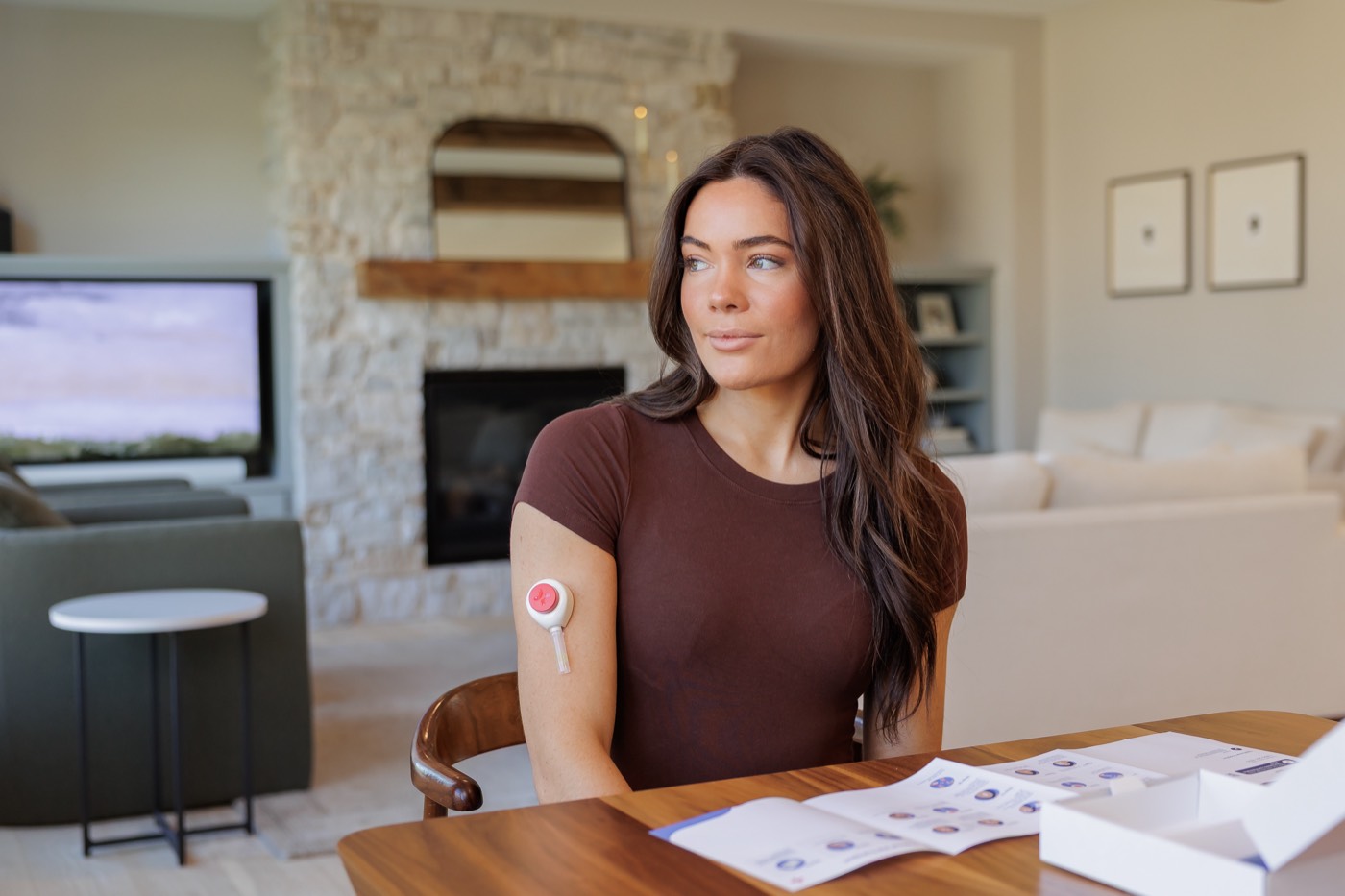
A small disc adheres to the back of your upper arm. A tiny lancet breaks the skin, a gentle vacuum draws blood steadily into an attached tube, and you take it off a few minutes later and mail it back.
What it's good at: it sits between the other two. You get meaningfully more blood than a fingertip yields, collected steadily rather than squeezed, which protects the sample from the hemolysis problem. The back of the upper arm has far fewer nerve endings than a fingertip, so most people report a brief pinch and then nothing. And there's no appointment, no travel, and nobody in your living room.
The trade-offs: it's still a capillary sample, not a venous one, so it won't match a full venipuncture draw for sheer volume. If a clinical situation genuinely needs multiple large tubes, a lab draw is the right tool and an honest provider will tell you so. The adhesive can leave a faint ring, and some people find the suction sensation odd the first time.
So does the collection method affect accuracy?
Not directly, and this is the part that gets muddled in marketing.
What determines whether a result is trustworthy is: whether the lab is certified, whether the assay is validated, whether enough usable sample arrived, and whether a clinician interprets the number in context.
Collection method matters because of that third one. A method that reliably delivers enough clean sample produces reliable results. A method that often arrives short, clotted, or hemolyzed produces repeat requests and gaps. The method isn't accurate or inaccurate on its own. It either sets the lab up to succeed or it doesn't.
Which is also why the single most common avoidable problem has nothing to do with the device at all.
The thing that actually ruins samples
Transit time.
Blood degrades. A sample collected on a Friday and left on the kitchen counter until Monday can arrive outside the window the lab needs, and no collection method saves it.
If you take a test at home, whatever the method:
- Collect on a day you can get it into the mail the same day or the next
- Write the collection date on the tube if the kit asks for it, because an undated sample can be rejected for that reason alone
- Don't collect right before a holiday weekend
That advice is boring, and it prevents more failed tests than anything else on this page.
How to choose
If you need a very large panel, or your clinician has asked for specific additional bloodwork, go to a lab. Venipuncture gives the most room, and there's no reason to be precious about it.
If you want a broad allergy panel without an appointment, an upper-arm device is the method built for exactly that trade: enough volume for a wide panel, collected cleanly, without a vein draw or a day off work.
If you're choosing between at-home options, ask how many allergens are on the panel. That number is downstream of the collection method more than anything else, and it's the most honest single question you can ask a provider.
What Dr.Drop uses
We use an upper-arm collection device, and our panel covers 63 environmental allergen sources. Every sample goes to a CLIA-certified lab, and a board-certified clinician reviews every result before it reaches you.
We picked that method for the reason above: it's the one that gets a broad panel done properly without turning a test into an appointment.
This article is for general information and isn't medical advice. Talk with a licensed clinician about which testing approach is right for your situation.