
What Dr.Drop Tests For: The 63 Environmental Allergens on Your Panel
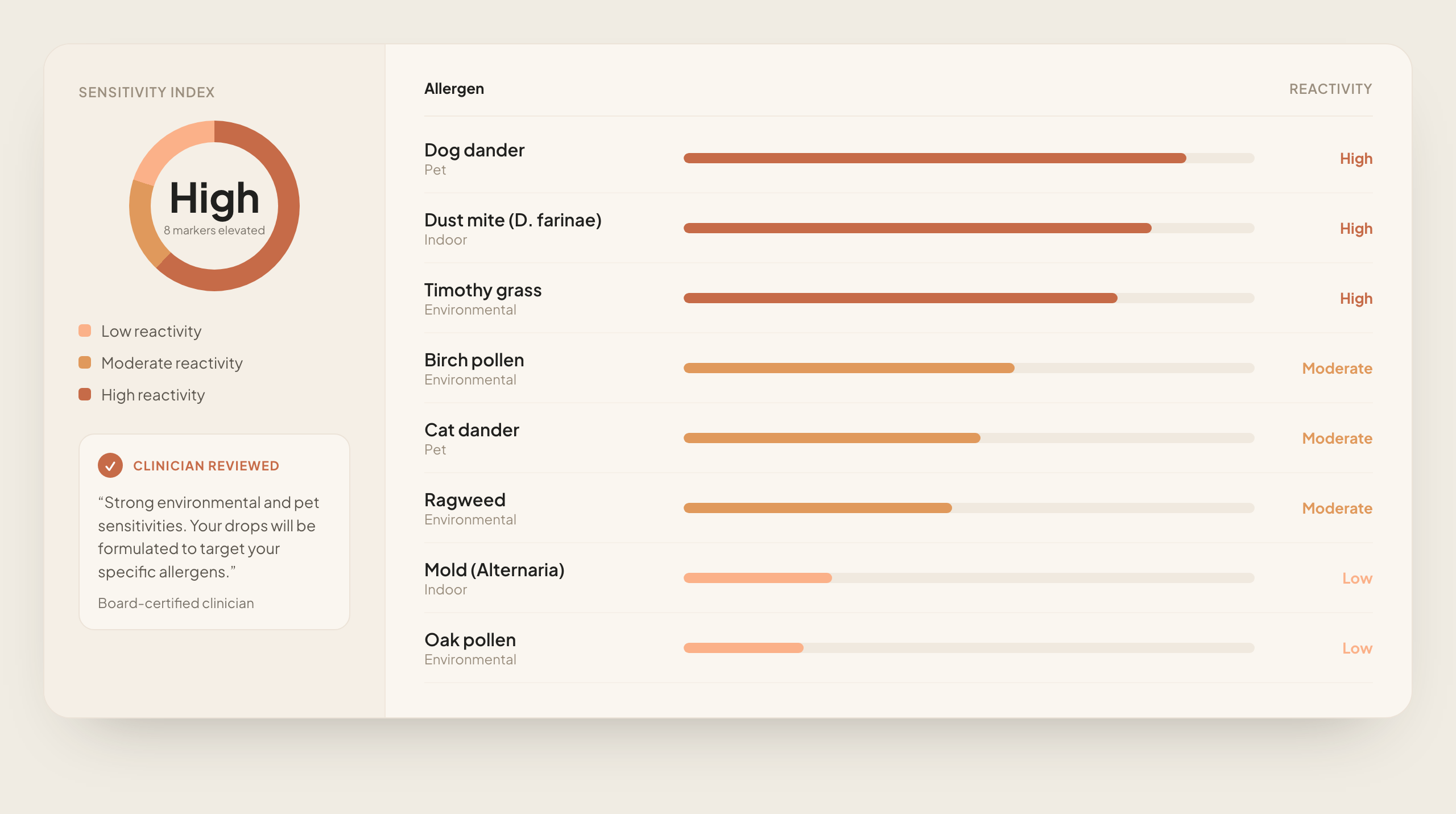
If you sneeze every spring, wake up congested, or can't pet a friend's cat without your eyes watering, you probably have a guess about what's behind it. Our at-home allergy test replaces the guess with an answer.
Dr.Drop uses the ALEX³ allergy panel, a molecular allergy test that measures IgE (the antibody your immune system makes when it reacts to an allergen) from a small blood sample you collect at home. Your Dr.Drop report covers 63 environmental allergen sources across 10 groups, and every one shows up on your results, whether it was detected or not.
Here's everything we test for.
Tree pollen (14)
Silver birch, oak, ash, London plane tree (sycamore), walnut, alder, acacia, Arizona cypress, cypress, mountain cedar, Sugi (Japanese cedar), olive, paper mulberry, and tree of heaven.
When it hits: late winter through spring (February–May). Some cedars and junipers peak in winter.
Grass pollen (6)
Timothy, Bermuda, Bahia, rye (pollen), common reed, and maize (corn) pollen.
When it hits: late spring through summer (May–August).
Weed pollen (8)
Ragweed, mugwort, ribwort (English plantain), lamb's quarters, pigweed, Russian thistle, wall pellitory, and hemp.
When it hits: late summer through fall (August–October), until the first hard frost.
Dust mites and storage mites (7)
European and American house dust mites, Blomia tropicalis, and four storage mites found in pantries, grain, and hay (Acarus siro, Glycyphagus domesticus, Lepidoglyphus destructor, and Tyrophagus putrescentiae).
When it hits: year-round, often worse in humid months and in winter when the heat is on.
Pets and small animals (9)
Cat, dog, dog urine, guinea pig, mouse, rabbit, rat, golden hamster, and Djungarian hamster.
When it hits: year-round, whenever you're around them.
Farm animals (4)
Horse, cattle, goat, and pig.
Mold and fungal spores (5)
Alternaria, Aspergillus, Cladosporium, Penicillium, and Malassezia.
When it hits: outdoor spores peak in summer and fall; indoor mold is year-round in damp areas like basements and bathrooms.
Cockroach (2)
German and American cockroach.
When it hits: year-round, indoors.
Stinging insect venoms (5)
Honey bee, common wasp (yellow jacket), paper wasp, bald-faced hornet, and fire ant.
Other environmental allergens (3)
Latex, ficus (weeping fig, a common houseplant), and pigeon tick.
How to read your results
For each allergen, your report shows whether it was detected and, if so, at what level:
- Low: a mild sensitivity
- Moderate: a clear sensitivity
- High: a strong sensitivity
- Very high: a very strong sensitivity
A detected sensitivity doesn't always mean that allergen causes your symptoms. That's why a Dr.Drop clinician reviews every result alongside your symptoms and history before recommending treatment.
What your personalized drops can include
If you're a good fit for treatment, your clinician builds a custom formula of under-the-tongue allergy drops from the allergens you tested positive for. Drops can include:
- Pollens: grasses, trees (including ash, birch, oak, sycamore, walnut, elm, hickory, willow, box elder, and cottonwood/poplar), ragweed, nettle, and a weed mix (including mugwort, English plantain, lamb's quarters, and pigweed)
- Dust mites
- Molds: Alternaria, Aspergillus, Cladosporium, and Penicillium
- Animals: cat, dog, horse, mouse, rabbit, guinea pig, and cockroach
Some allergens we test for aren't treated with drops. Insect venoms are the most important example: if you've had a serious reaction to a sting, talk to a board-certified allergist, because venom allergy is treated differently. A few regional trees (such as alder, cedar and juniper, Japanese cedar, olive, and mulberry) also aren't in our drops today. They still appear on your report, so you'll know about them.
This article is for general information and isn't medical advice. The presence of IgE antibodies shows sensitization, which a clinician interprets alongside your symptoms and history.